
IPTV, or Internet Protocol Television, delivers live TV and on-demand content through internet connections rather than traditional broadcast methods. Understanding the question “is IPTV legal in US” involves unpacking the service’s technology, the legal framework surrounding it, and how users can safely navigate this evolving landscape.
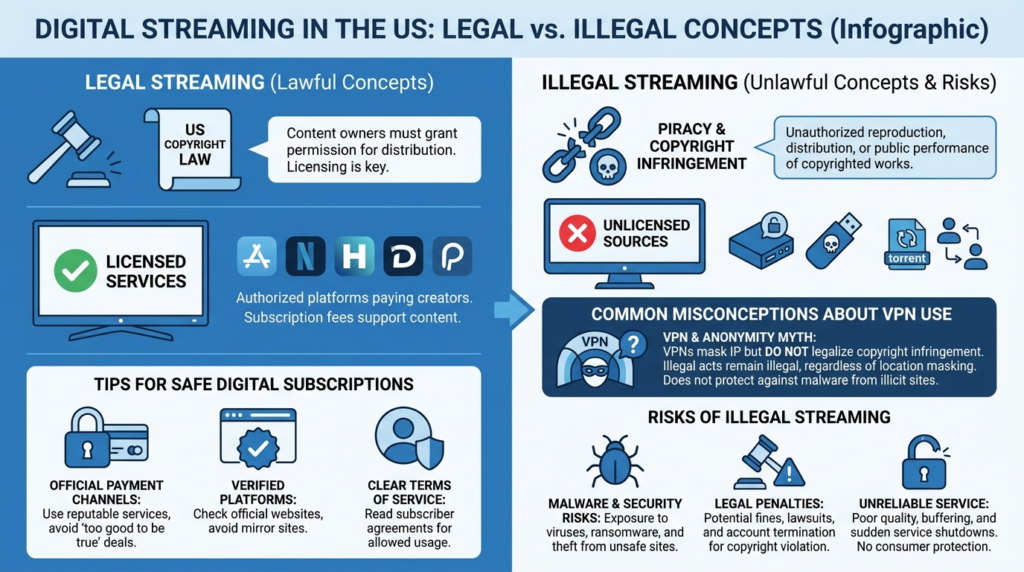
At its core, IPTV is a legal technology used by many licensed providers for streaming television content. However, legality in the US depends on whether the IPTV service holds the proper content licenses. Legal IPTV providers obtain authorization to distribute live channels, movies, and series, ensuring they comply with copyright and broadcasting laws. In contrast, illegal IPTV services operate without such licenses, often offering unauthorized streams at unusually low prices. This distinction is crucial for consumers who want to avoid legal and security risks.
The Protecting Lawful Streaming Act along with the Digital Millennium Copyright Act (DMCA) form the backbone of US legislation regulating IPTV. These laws target unauthorized streaming and copyright infringement, making it illegal to distribute or access pirated IPTV content. Users who subscribe to illegal IPTV services risk facing legal consequences, including fines or other penalties. This legal context is described in detail by resources like TroyPoint’s IPTV legality analysis, which explains how these laws affect everyday users.
A common misconception is that using a VPN can make illegal IPTV legal. While a VPN can mask the user’s location, it does not legitimize an unlicensed IPTV subscription. Users must understand that VPNs provide privacy layers but do not exempt them from copyright laws. Similarly, not all low-cost IPTV services are illegal, but extremely cheap or free offerings without clear licensing documentation should raise suspicion.
To safely subscribe to IPTV in the US, consumers need to verify the provider’s legality. Practical steps include checking for licensing certificates, transparent company information, and customer support responsiveness. Legal IPTV providers typically list their licensing on their websites, and you can cross-reference this with known copyright holders. Articles on safe IPTV subscription practices provide deeper guidance on spotting red flags such as vague terms of service, unclear pricing structures, and reseller-only platforms without authorization.
Premium legal IPTV services often come with electronic program guides (EPG) showcasing live programming schedules and on-demand video libraries (VOD), enhancing the viewing experience. Using a reliable IPTV subscription also boosts security by minimizing exposure to malware risks common in illegal streaming apps.
Beyond legal risks, illegal IPTV use jeopardizes user privacy and device security. Unauthorized services can embed harmful software that compromises personal data. Consumers should consider this alongside the potential ISP monitoring that some worry about. While ISPs generally focus on traffic volume rather than specific streaming content, repeated illegal activity can attract scrutiny. The difference in IPTV laws by state is minimal since federal law governs copyright, but regional enforcement intensity may vary.
Many questions arise around the possession and resale of IPTV devices or subscriptions. Owning an IPTV box in itself is not illegal; legality hinges on the content accessed. Reselling IPTV subscriptions without an official reseller agreement violates copyright laws and places users at risk.
For more FAQs addressing user concerns about IPTV use and legality, resources like Infomir’s insights on IPTV myths clarify common doubts, including ISP detection and consumer protections.
Choosing a legal IPTV provider means prioritizing transparency, service reliability, and compliance with licensing laws. These providers often offer high-quality streams, live channel packages, and extensive on-demand libraries without the risks tied to illegal services. Exploring detailed guides such as how to get IPTV safely can empower consumers to make informed decisions.
In summary, IPTV technology itself is legal in the US, but legality depends entirely on the service’s authorization to broadcast content. Users should avoid illegal options to steer clear of legal troubles, malware risks, and service interruptions while enjoying a reliable entertainment experience. For anyone interested in a premium streaming solution, selecting a licensed IPTV service is the safest path.
For trustworthy IPTV subscription options and comprehensive support, consider visiting TiviStation to explore legal IPTV services tailored to US consumers.